
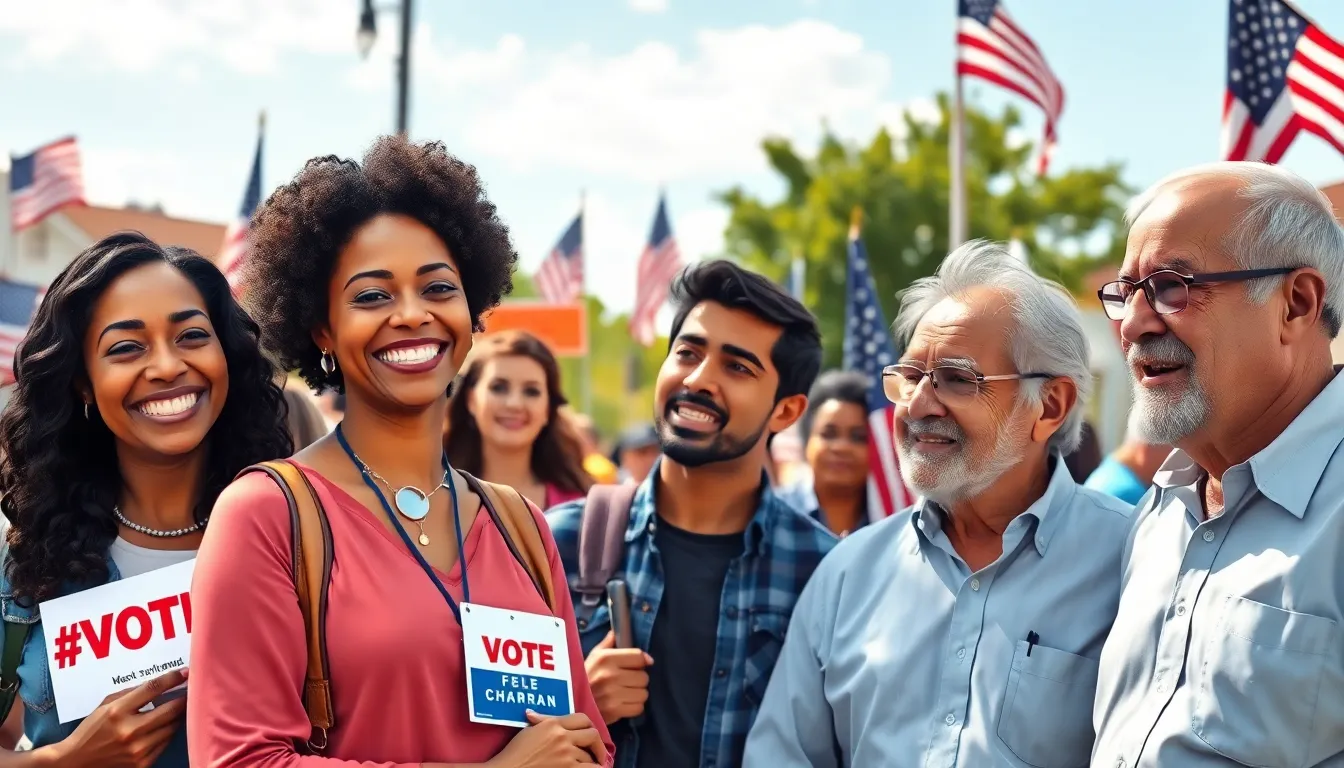
In the land of the free and the home of the brave, the U.S. government is as diverse as its inhabitants. Picture a quirky mix of democracy, federalism, and a sprinkle of checks and balances, all wrapped up in a shiny Constitution. It’s like a well-baked pie—everyone gets a slice, but no one’s quite sure who’s in charge of the recipe.
Overview of the Type of Government in USA
The U.S. government operates as a constitutional republic. This means elected representatives govern on behalf of the citizens. A president serves as the head of state, while a bicameral legislature, consisting of the House of Representatives and the Senate, creates laws.
Federalism characterizes the U.S. political system. Power is divided between the national and state governments. This division allows states to maintain authority over local matters while the federal government manages issues affecting the entire country. Each state has its own constitution, laws, and government structure, highlighting the independence of state governance.
Checks and balances play a crucial role in protecting democratic principles. The Constitution establishes a system where each branch of government—executive, legislative, and judicial—maintains oversight over the others. For instance, the president can veto legislation, but Congress can override this veto with a two-thirds majority. Similarly, the Supreme Court interprets laws and can declare legislation unconstitutional.
The separation of powers helps prevent any single entity from dominating governance. By distributing authority, the system encourages collaboration and accountability among the branches. Democracy thrives through regular elections, allowing citizens to influence their leaders and policies.
Political parties also shape the U.S. government. The two major parties, Democrats and Republicans, dominate the landscape, but various smaller parties contribute to the political discourse. Voter participation is essential in this democratic framework, as it determines representation at all levels of government.
Branches of Government
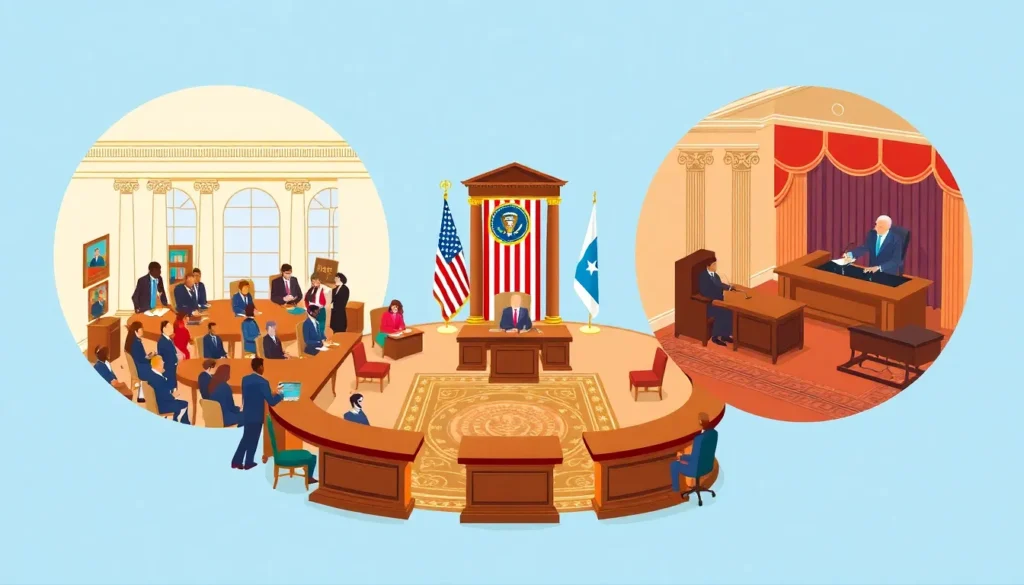
The U.S. government consists of three distinct branches: executive, legislative, and judicial. Each branch has specific roles and responsibilities to maintain balance and efficiency.
Executive Branch
The executive branch enforces laws and administers government policies. The President, as the head of this branch, appoints Cabinet members and oversees federal agencies. Responsibilities include formulating foreign policy, commanding the military, and ensuring the implementation of legislation. Additionally, the President can veto laws passed by Congress, providing an essential check on legislative power.
Legislative Branch
The legislative branch is responsible for making laws. This branch comprises two chambers: the House of Representatives and the Senate. Each chamber has unique powers, such as initiating revenue bills in the House and confirming presidential appointments in the Senate. Legislative sessions take place regularly, with representatives and senators advocating for their constituents’ needs while collaborating to create comprehensive legislation.
Judicial Branch
The judicial branch interprets laws and ensures justice. It includes the Supreme Court and lower federal courts, handling cases that involve constitutional issues and federal laws. Courts evaluate laws against the Constitution, serving as a final arbiter on legal disputes. Their rulings shape U.S. law and public policy, reinforcing the balance of power among branches.
Federalism in the USA
Federalism plays a crucial role in the governance of the United States, establishing a framework for dividing power between the national and state governments.
State Governments
State governments operate independently, possessing authority over local policies and regulations. Each state comprises its own constitution, legislative body, executive branch, and judicial system. Laws on education, transportation, and healthcare often vary by state, reflecting unique regional priorities and needs. For example, states can establish their own tax structures, further influencing fiscal policy and economic development. Relationships between state governments and the federal government grow more complex as states seek to manage local issues while adhering to national laws. This balance of power empowers states to act as “laboratories of democracy,” experimenting with policies that can enhance governance and serve as models for others.
Local Governments
Local governments emerge directly from state authority, providing essential services and governance at the community level. They encompass counties, cities, towns, and districts, tailoring policies to meet specific local needs. Local authorities handle day-to-day issues such as zoning, public safety, and local education. Engineered to be closely connected to citizens, local governments often encourage public participation through town hall meetings and elections. For instance, cities can implement unique programs addressing community concerns like housing and public transportation. This decentralized approach enables swift responses to local challenges, reinforcing the democratic principle of government being closest to the people it serves.
Democratic Principles in the USA
The democratic principles in the USA emphasize citizen participation and representation in governance. Key aspects include elections and voting, which allow individuals to influence their government.
Elections and Voting
Regular elections occur at federal, state, and local levels. Voters elect representatives, including members of Congress and state legislatures. The right to vote remains a cornerstone of American democracy, ensuring diverse perspectives are reflected in decision-making. Registration is necessary, with varying deadlines across states. Many states utilize early voting and mail-in voting to increase accessibility. Technologies such as electronic voting machines streamline the process, while measures like voter ID laws aim to ensure integrity. Overall, each election shapes the political landscape, guiding policy and leadership at multiple governance levels.
Civic Responsibility
Civic responsibility enhances democratic engagement within communities. Citizens maintain the duty to stay informed about political issues impacting their lives. Active participation in local meetings and forums fosters dialogue and accountability. Volunteering for community service demonstrates commitment to societal welfare. Moreover, engaging in civic activities, like joining political organizations, strengthens the democratic process. Respecting laws and supporting the electoral system contribute to a stable society. Each individual’s commitment to these responsibilities reinforces the foundational principles of democracy in the USA.
The U.S. government embodies a unique blend of democracy and federalism that ensures power is distributed and balanced. This intricate system fosters active citizen participation and representation, vital for a thriving democracy. By encouraging local governance and diverse political engagement, it allows for tailored solutions to community needs. The interplay between the branches of government and the role of political parties further enrich the democratic landscape. As citizens engage in the electoral process and civic responsibilities, they contribute to a responsive and stable governance that reflects the values and needs of the nation.


